ExtendMy.Life is an affiliate e-commerce platform that curates and promotes products aimed at improving health, longevity, and quality of life. While it serves a global audience, its primary market focus is Europe.
As the platform is expanded with more content, product pages, and multilingual resources, maintaining strong technical SEO became very essential. Several technical improvements were needed to ensure search engines could crawl, interpret and index the platform effectively.
Our goal was to strengthen the technical SEO foundation so that search engines can better understand the overall site structure and improve accessibility along with the organic visibility.
Challenges
During the technical SEO audit of ExtendMy.Life, several issues were identified that could limit the search engine performance and accessbility. Some of them are asfollows:
- Inconsistent heading hierarchy across pages
- Multiple H1 tags on single pages
- Weak internal anchor text for important disclosure
- Crawl budget inefficiencies due to parameter-based URLs
- Limited structured data implementation
- Missing or unclear canonical and hreflang signals
- Client-side rendering challenges affecting crawlability
Solutions
The team at Gurzu conducted a comprehensive technical SEO audit of ExtendMy.Life to identify structural, accessibility, and crawlability issues affecting search performance. We analyzed site architecture, page structure, and search engine guidelines, and uncovered several opportunities to strengthen the platform’s technical foundation.
1. Fixing Heading Hierarchy for Accessibility
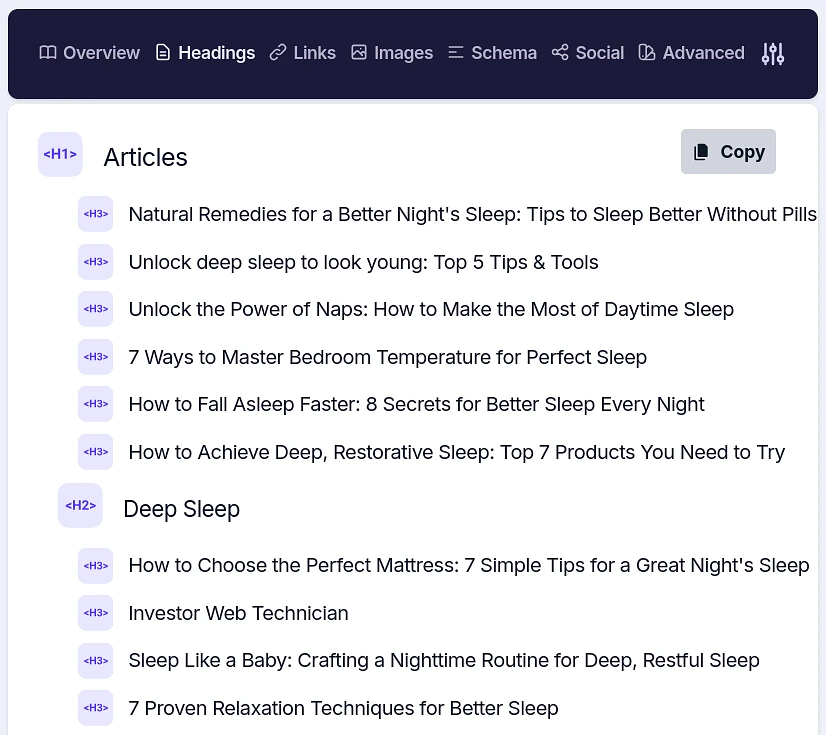
One of the key improvements was correcting the heading structure across the pages. Previously, heading elements were skipping levels, such as using <h5> tags directly after higher-level sections. This can create confusion for screen readers and negatively affect accessibility audit scores.
The Heading structure across the pages was corrected. Previously the heading elements were not in hierarchical level.
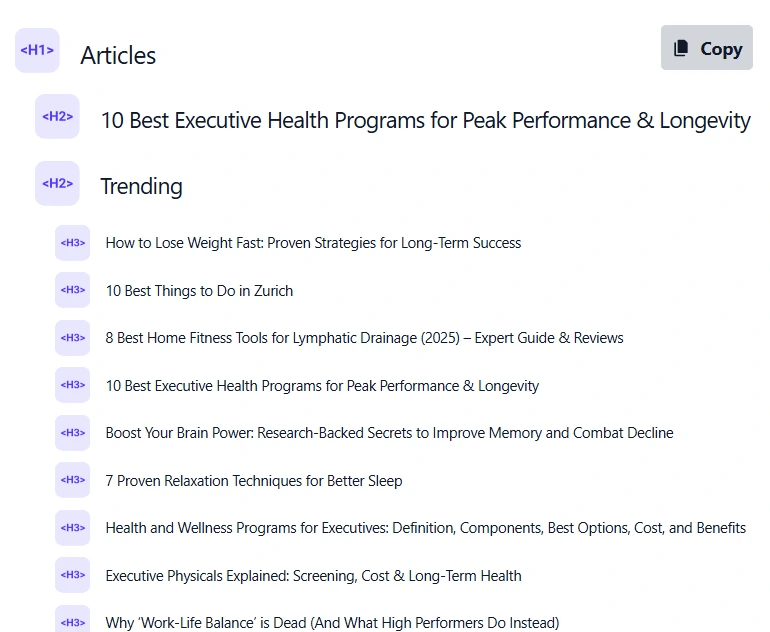
To resolve this, the heading hierarchy was reorganized into a sequential structure (for example, following a logical flow like H1→H2 → H3 → H4 where needed). Proper heading order helps interpret page content more accurately and improves overall semantic SEO.
Before Fix (Incorrect Structure):
After Fix (Correct Structure)
The headings were reorganized into a logical sequence:
Why This Matters?
Proper heading hierarchy improves:
- Accessbility for the screen readers
- Content interpretation by search engines
- Semantic SEO signals
- Lighthouse accessibility scores
2. Fixing Multiple H1 Tags
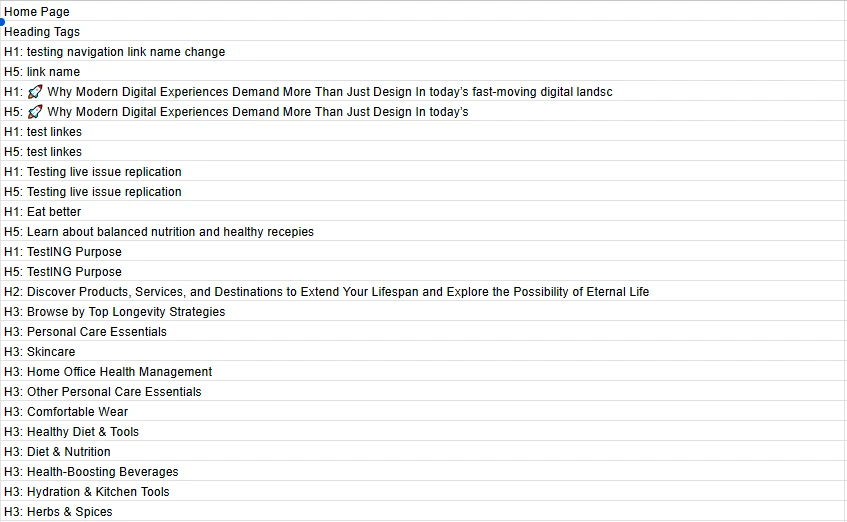
Another issue discovered during the audit was the presence of multiple H1 tags on a single page, (homepage).
Problem
Multiple H1 headings create ambiguity about the primary topic of the page.
Solution
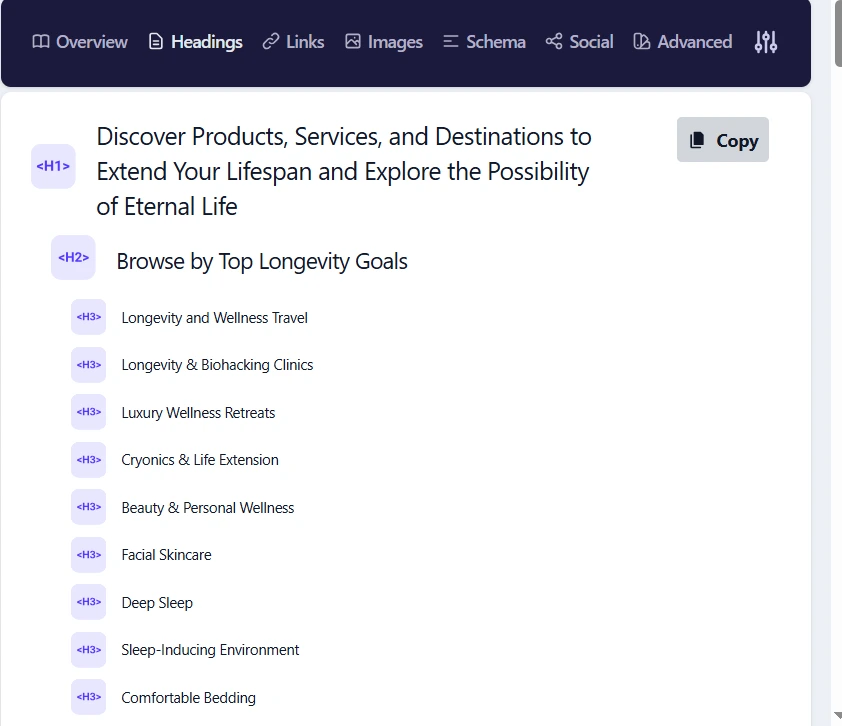
Each page was restructured to include:
- Only one H1 tag
- Supporting content organized using H2, H3, and H4 headings
Impact
This improvement helps search engines clearly understand the main topic of each page and improves overall page structure.
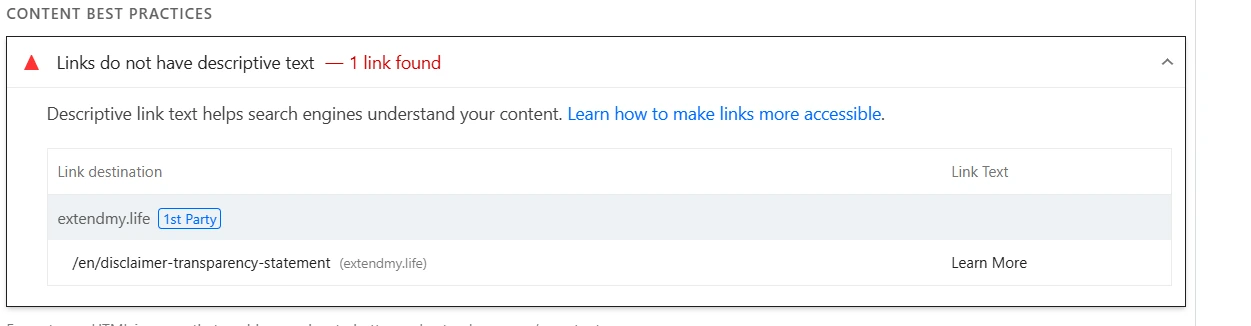
3. Improving anchor text for transparency
The ExtendMy.Life platform previously used generic anchor text such as:
Before
“Learn more”
This was updated to provide clearer and more descriptive text.
After
“Read our Affiliate Disclosure”
Why It Matters?
Descriptive anchor text improves:
- User trust and transparency
- Accessibility
- SEO context for linked pages
4. Mobile Navigation Optimization
PageSpeed Insights and Lighthouse highlighted issues related to navigation elements in the mobile footer.
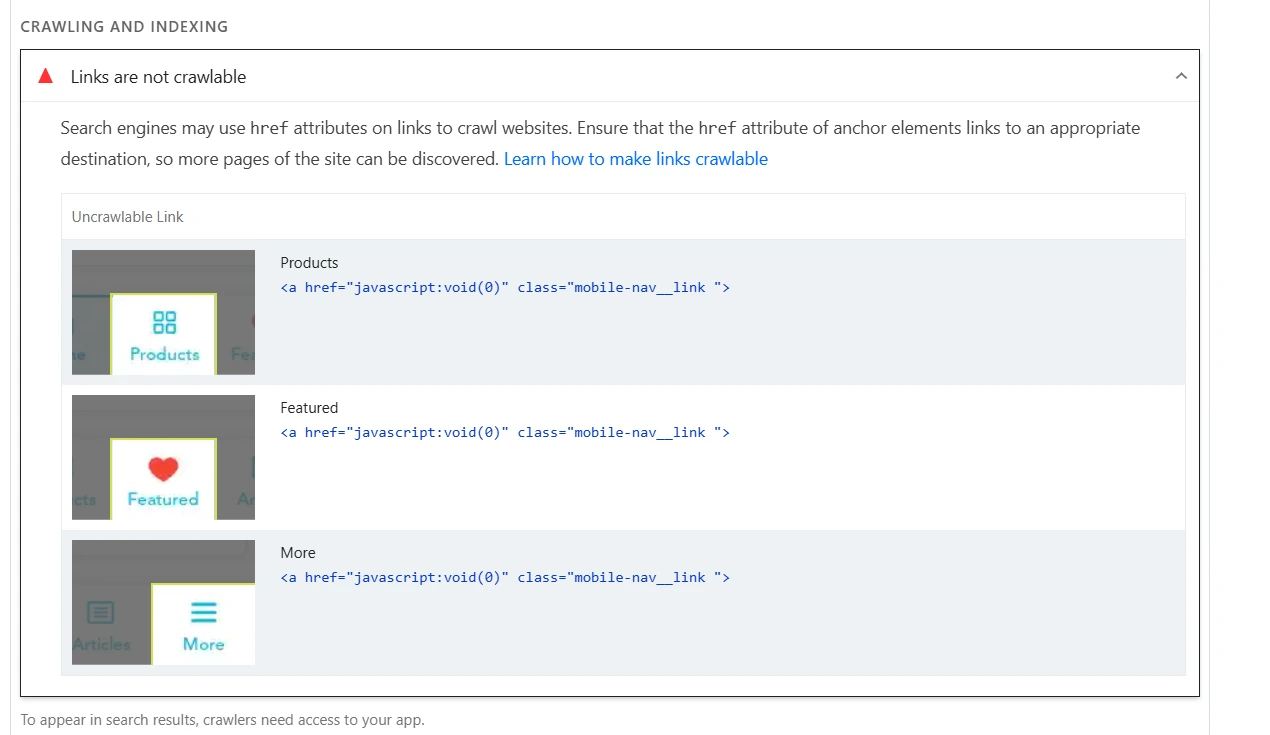
Previously, some navigation elements were implemented using anchor tags <a>, even though they triggered interactive actions.
These were updated to button elements where appropriate.
Why This Matters?
This improvement enhances:
- Accessibility
- semantic HTML usage
- Lighthouse best practice scores
- user interaction behavior
The Impact of Our Technical SEO Improvements
Great content is only useful if people can find it. That’s where technical SEO comes in, making sure every page is discoverable, understandable, and trusted by search engines.
We recently made a series of behind-the-scenes improvements, from smarter sitemaps to cleaner URLs and structured data. In this post, we’ll explain what we did, why it matters, and how it helps search engines see and index the site properly.
1. Dynamic Sitemap System
Search engines find your content through sitemaps. For a content-rich, multilingual platform, a simple static sitemap just isn’t enough.
We implemented a sophisticated, fully dynamic sitemap generation system that connects directly to our backend API. Here’s what makes it stand out:
- Multi-Locale Support: We generate separate, well-structured sitemap paths for both English (/en) and German (/de) locales, ensuring our international users are served the right content.
- Real-Time Dynamic URLs: Rather than manually maintaining a sitemap, our system fetches URLs dynamically at build time — covering Articles, Categories, Subcategories, Products, and Product Regroupings.
- Crawl Budget Protection: Our robots.txt now explicitly disallows crawling of URL parameters like utm_*, ref, sort, and filter. This prevents search engines from wasting their crawl budget on thousands of near-duplicate filtered URLs.
Why It Matters?
Crawl budget is the number of pages a search engine will crawl on your site within a given timeframe. Protecting it by blocking low-value parameter-based URLs means bots spend more time indexing your best content, not infinite variations of a filtered product page.
2. Clear Canonical and Hreflang Implementation
To make sure search engines know which pages to index and which language version to show, we focused on improving our use of canonical URLs and hreflang tags across the site. These improvements help avoid duplicate content issues, improve international visibility, and ensure users see the right content in the right language.
Canonical URLs
- Every major page now includes a rel=”canonical” tag that points to the preferred version of that page. This tells search engines which URL is the “master” version, preventing duplicates from appearing in search results. By clearly defining canonical routes, we help search engines focus their crawl budget on high-value pages instead of indexing multiple variations of the same content.
Hreflang Tags
For multilingual pages, we implemented hreflang alternates to map English and German versions accurately. This ensures that search engines serve the correct language version to the right audience, which is critical for international SEO. For example, a German-speaking user will see /de/… pages in search results, while English-speaking users will see /en/.
Why It Matters?
Proper canonicalization and hreflang implementation are essential for both SEO and user experience. They:
- Prevent duplicate content penalties
- Improve crawl efficiency by directing search engines to the correct pages
- Ensure international users see content in their preferred language
By improving these foundational elements, we’ve made our site easier for search engines to understand and for users to navigate, all while maximizing the value of the crawl budget.
3. Comprehensive Structured Data (JSON-LD)
Structured data is one of the most powerful and most underutilized tools in technical SEO. It gives search engines explicit, machine-readable context about your content, making you eligible for rich results like star ratings, breadcrumb trails, and knowledge panels.
We built a dedicated schema engine (src/lib/schema.ts) that generates rich JSON-LD structured data across all critical page types:
- BreadcrumbList - Helps search engines map our site hierarchy and can display breadcrumb trails directly in search results, improving click-through rates.
- Article & Blog Posting - Provides detailed metadata, including author Person entities, publication and update dates, and featured images.
- Product & Collection Page - Maps our supplement and product data to Schema.org types, making individual products eligible for rich snippets.
Why it matters?
Rich results stand out in search listings. A product page with ratings, a price, and availability shown directly in Google results will naturally attract more clicks than a plain blue link, even if it ranks slightly lower. Structured data is how you earn those enhanced listings.
4. SEO-Friendly URL Structure
URLs are one of the simplest yet most powerful signals you can send to both users and search engines. Clear, descriptive URLs help search engines understand the content of a page at a glance and provide users with context before they even click a link.
Clean URLs offer several key benefits:
- Keyword relevance: Embedding meaningful words in the URL itself helps search engines associate the page with relevant queries.
- User trust: People are more likely to click links that clearly indicate where they’ll end up.
- Improved context for search engines: A well-structured URL gives search engines an additional clue about the hierarchy and topic of your content, supporting better crawlability and indexing.
By prioritizing clean URLs, we make the site easier to navigate, more trustworthy for users, and more understandable for search engines, all of which contribute to stronger search visibility.
5. Server-Side Rendering (SSR) for Better SEO
Search engines rely on being able to read your site’s content. When pages are rendered on the client side (CSR), bots sometimes struggle to fully see or index all the content, especially dynamic content loaded with JavaScript.
By using Server-Side Rendering (SSR), the HTML for each page is generated on the server before it’s sent to the browser. This means:
- Immediate visibility: Search engines get fully rendered pages without relying on JavaScript execution.
- Faster indexing: Bots can crawl and index content more efficiently, improving overall discoverability.
- Better performance for users: SSR also often improves page load times, which is another factor that impacts search rankings and user experience.
In short, SSR ensures that both search engines and users see the full content immediately, making your pages more crawlable, indexable, and SEO-friendly.
6. Proper 404 and 500 Page Handling
Search engines and users need clear signals when a page isn’t available. Implementing proper 404 (Not Found) and 500 (Server Error) handling ensures that missing or broken pages don’t harm your site’s crawl efficiency or user experience.
Why It Matters?
- Preserves crawl budget: Search engines won’t waste time on broken pages, allowing them to focus on your valuable content.
- Improves user experience: Visitors encountering a 404 or server error are guided appropriately, reducing frustration.
- Signals site health: Proper error handling helps search engines understand which pages are valid, preventing the indexing of broken URLs and maintaining trust.
By setting up clear 404 and 500 responses and redirects where needed, the site becomes more resilient, crawl-friendly, and user-friendly, all key factors for strong technical SEO.
Why It All Matters?
Technical SEO isn’t glamorous; it lives in robots.txt files, JSON-LD scripts, and sitemap configurations that most users never see. But it’s the foundation that every other aspect of your search strategy is built on.
The improvements we’ve implemented in our product, from our dynamic sitemap system to our rich structured data engine, collectively send a clear message to search engines: this site is well-organized, trustworthy, and built with both users and crawlers in mind.
As these changes are indexed and recognized, we expect to see measurable improvements in crawl efficiency, indexing coverage, rich result eligibility, and ultimately rankings and organic traffic.